
Magic Mind Review (2026): A Pharmacist’s Honest, Evidence-Based Analysis
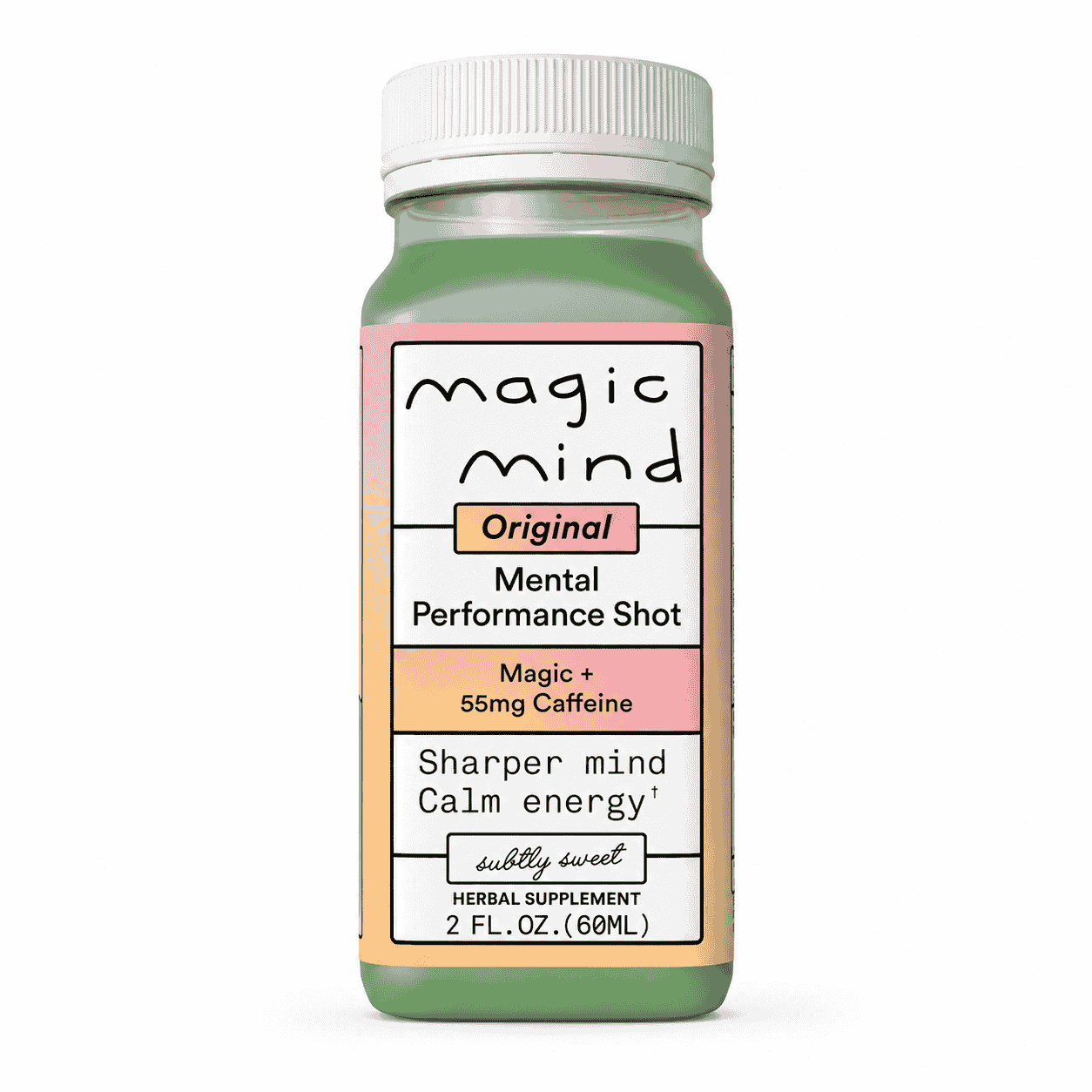
Magic Mind calls itself “The World’s First Productivity Drink.” Bold claim. In this review, I analyze every ingredient against the published clinical literature, break down the pricing, highlight the genuine strengths, and tell you clearly where the formula falls short — so you can make an informed decision rather than a marketing-driven one.
Affiliate Disclosure: We may earn a small commission if you purchase through the Amazon link above, at no extra cost to you. Prices and availability are subject to change. Always verify on the retailer’s page before purchasing.
⚡ Key Takeaways
- ✓Magic Mind is a 2oz daily productivity shot combining ceremonial matcha, adaptogens, nootropics, and functional mushrooms in a convenient format.
- ✓The caffeine-L-theanine pairing from matcha is among the best-validated nootropic combinations in the published literature, and Magic Mind executes this well.
- ✓Key adaptogens — Bacopa monnieri, Ashwagandha, and Rhodiola rosea — all have credible clinical support, though effects from adaptogens typically require 8–12 weeks of consistent use.
- !Magic Mind uses a proprietary blend, meaning individual ingredient doses are not fully disclosed. Based on available information, some doses may fall below clinically effective thresholds.
- !At approximately $3.25–$4.95 per shot, Magic Mind is a premium-priced product. Value depends heavily on your response to the formula.
- iA newer MAXX formulation offers 165mg time-release caffeine and higher nootropic doses, which may suit users with greater stimulant tolerance.
- iPregnant individuals, those sensitive to caffeine, or anyone on CNS-active medications should consult a healthcare provider before use.
What Is Magic Mind?
Magic Mind is a ready-to-drink, 2-fluid-ounce daily shot formulated by entrepreneur James Beshara, who launched the brand in 2018–2019 following his own experience with caffeine-induced cardiovascular stress. The brand markets it as “The World’s First Productivity Drink” — a once-daily mental performance shot designed to replace or complement the morning coffee ritual.
Unlike traditional energy drinks that rely almost exclusively on high doses of caffeine and sugar, Magic Mind is built around a multi-ingredient stack: ceremonial-grade organic matcha as the caffeine base, a selection of adaptogenic herbs, evidence-backed nootropics, functional mushrooms, and vitamins. Each ingredient is chosen to support a specific aspect of cognitive performance — focus, stress resilience, mental clarity, or neuroprotection.
The brand now offers two primary formulas: the Original (approximately 55mg caffeine) and the MAXX (165mg time-release caffeine, higher nootropic doses). Both are available as monthly subscriptions or one-time purchases, and Magic Mind products are stocked in select Sprouts, Erewhon, and Central Market retail locations.
How Does Magic Mind Work?
Magic Mind’s effects operate through several overlapping mechanisms, depending on the ingredient and time frame of use.
Acute effects (within 30–90 minutes): The natural caffeine from matcha, working in synergy with L-theanine, is responsible for the most immediate cognitive changes. Caffeine blocks adenosine receptors, delaying the buildup of mental fatigue and sharpening focus. L-theanine modulates this stimulation by promoting alpha-wave brain activity — the state associated with calm alertness. This pairing is well-documented to reduce the jitteriness and cardiovascular spike associated with caffeine alone.
Cumulative effects (8–12 weeks): Adaptogens like Ashwagandha and Rhodiola rosea work on the hypothalamic-pituitary-adrenal (HPA) axis, modulating the cortisol stress response over time. Bacopa monnieri supports neuronal communication and memory consolidation through its bacosides, which take weeks of consistent supplementation to exert measurable effects. Lion’s Mane stimulates Nerve Growth Factor (NGF) production, supporting neuronal health and potentially cognitive resilience.
Neurochemical support: Citicoline (included in the MAXX formula at a clinically meaningful dose) supports the synthesis of phosphatidylcholine, a key structural component of neuronal membranes, and precursor to the neurotransmitter acetylcholine — directly relevant to memory and learning.
Magic Mind Ingredients: A Clinical Breakdown
The formula’s caffeine base (~55mg in Original). Contains natural L-theanine, catechin antioxidants (EGCG), and chlorophyll. Slower caffeine release than coffee due to the catechin-caffeine complex. Widely studied for cognitive and antioxidant benefits.
Additional L-theanine beyond what matcha provides. The caffeine + L-theanine combination is considered the most clinically validated nootropic pairing in the literature, consistently shown to improve focused attention and reduce caffeine-induced anxiety.
An Ayurvedic herb with solid RCT data supporting improvements in memory free recall and information processing speed over 12-week trials (Pase et al., 2012). Optimal dose in studies: 300–450mg extract daily. Magic Mind’s exact dose is undisclosed.
One of the most researched adaptogens. Clinical trials show significant reductions in serum cortisol, perceived stress, and anxiety at doses of 300–600mg/day. Also supports sleep quality and physical stamina. Evidence for cognitive benefits is growing.
An adaptogen with good evidence for reducing mental fatigue, burnout, and cognitive performance under stress. Works faster than most adaptogens — effects can appear within days to weeks. Typical effective dose: 200–680mg standardized extract.
Hericium erinaceus. Stimulates Nerve Growth Factor (NGF) production. A 2025 double-blind RCT in Frontiers in Nutrition (n=40) found acute cognitive and mood improvements. Long-term neurological benefits are plausible but require more robust human data.
Traditionally used for energy and endurance. Some evidence supports improved oxygen utilization and reduced fatigue in athletic populations. Direct cognitive benefits in healthy adults are less established. Mechanistically interesting but needs more human trials.
Anti-inflammatory and neuroprotective properties are well documented. Bioavailability is a key challenge — curcumin has poor absorption unless combined with piperine or in liposomal form. Magic Mind’s formulation details on this are not disclosed.
Available in the MAXX formula. Cognizin® is the patented, clinically tested form. Studies show it increases brain energy metabolism by approximately 13.6% and supports phospholipid synthesis. Typical effective dose: 250–500mg. MAXX claims a “full clinically effective dose.”
Essential cofactors for neurotransmitter synthesis and energy metabolism. Deficiencies in B vitamins — particularly B6, B9, and B12 — are associated with cognitive decline. Supplemental B vitamins are most impactful in those with dietary gaps.
Used as natural sweeteners and to improve palatability. Honey provides minor glycemic support and antioxidants. These are functional ingredients rather than nootropics, but contribute to the overall drinkability and mild natural energy.
Evidence Summary Table
| Ingredient | Primary Benefit | Clinical Evidence Level | Time to Effect | Effective Dose (Literature) |
|---|---|---|---|---|
| Matcha + L-Theanine | Focused calm energy | Strong RCT Data | 30–60 min | 50–200mg caffeine + L-theanine |
| Bacopa Monnieri | Memory, learning | Strong RCT Data | 8–12 weeks | 300–450mg extract/day |
| Ashwagandha | Stress, cortisol reduction | Strong RCT Data | 2–8 weeks | 300–600mg/day |
| Rhodiola Rosea | Fatigue, burnout | Moderate | Days–weeks | 200–680mg/day |
| Lion’s Mane | NGF, neuroprotection | Moderate (growing) | Weeks–months | 500–1000mg extract/day |
| Cordyceps | Energy, endurance | Limited human data | Weeks | Not well established |
| Citicoline (Cognizin®) | Brain energy, memory | Strong (MAXX only) | Days–weeks | 250–500mg/day |
| Curcumin | Neuroinflammation | Moderate | Weeks | 500–1000mg (bioavailable form) |
Potential Benefits of Magic Mind
Proven & Well-Supported Benefits
Smoother, sustained energy: The organic matcha base delivers a gentler caffeine curve than coffee, with the L-theanine content helping to blunt the adrenergic overstimulation that causes jitteriness. This is one of Magic Mind’s clearest strengths — the energy experience is notably different from a typical energy drink.
Stress and cortisol modulation: Ashwagandha, with its well-documented effects on HPA axis regulation, can meaningfully reduce perceived stress and physiological cortisol levels when taken consistently over several weeks. This is one of the best-supported claims in the nootropic space.
Memory and learning support (long-term): Bacopa monnieri’s bacosides support acetylcholinesterase inhibition and antioxidant protection in hippocampal tissue, contributing to improvements in memory consolidation that become measurable after 8–12 weeks of daily use.
Plausible But Nuanced Benefits
Cognitive resilience under stress: Rhodiola rosea has good evidence for attenuating the cognitive performance decline associated with stress and sleep deprivation, making it particularly relevant for professionals facing high-demand workloads.
Neuroinflammation reduction: Both curcumin and Lion’s Mane contribute to an anti-neuroinflammatory profile that, over time, may support cognitive resilience — though the degree of benefit in healthy younger adults without inflammatory conditions is harder to quantify.
Side Effects and Safety Considerations
Magic Mind is generally well-tolerated in healthy adults when used as directed (one shot per day). That said, as with any multi-ingredient supplement, individual responses vary. Common reported side effects in the low-to-moderate incidence category include:
Caffeine-related effects: Even at 55mg (Original), some individuals — particularly those caffeine-sensitive or taking stimulant medications — may experience mild palpitations, headache, or anxiety. The MAXX formula at 165mg is equivalent to a large cup of coffee, which is more likely to cause these effects in sensitive individuals.
GI effects from adaptogens: Ashwagandha and Bacopa monnieri are both associated with mild GI upset (nausea, loose stools) in a subset of users, particularly when taken on an empty stomach. Taking Magic Mind with food may reduce this risk.
Thyroid interactions: Ashwagandha has thyroid-stimulant properties that can be clinically meaningful in individuals with thyroid conditions or those taking thyroid medications. This is a pharmacologically important consideration that many reviews overlook.
Bleeding risk: Turmeric has mild antiplatelet activity. In individuals taking anticoagulants (warfarin, aspirin, clopidogrel) or scheduled for surgery, this warrants a conversation with your prescriber.
Who Should Exercise Caution or Avoid Magic Mind
| Population | Concern | Recommendation |
|---|---|---|
| Pregnant or breastfeeding individuals | Insufficient safety data for multiple adaptogens; caffeine intake guidance during pregnancy | Avoid |
| Children and adolescents | Not studied in pediatric populations; caffeine and adaptogen safety unclear | Avoid |
| Thyroid conditions | Ashwagandha stimulates thyroid activity | Consult physician |
| On anticoagulant therapy | Turmeric has mild antiplatelet action | Consult prescriber |
| Caffeine-sensitive individuals | Even low-dose caffeine may cause adverse effects | Start with Original; monitor |
| Autoimmune conditions | Ashwagandha and Lion’s Mane may modulate immune function | Consult physician |
| Anxiety disorders | Caffeine can worsen anxiety in susceptible individuals | Assess caffeine tolerance first |
Pros and Cons
✓ What Works Well
- Science-backed ingredient selection covering multiple cognitive targets
- Caffeine-L-theanine synergy is the gold standard of nootropic pairs
- Third-party tested for quality assurance
- Extremely convenient once-daily format
- Natural, organic matcha base — no synthetic stimulants
- MAXX formula uses Cognizin® (the patented, evidence-backed citicoline form)
- Available in retail locations (Sprouts, Erewhon, Central Market)
- 30-day money-back guarantee for first-time subscribers
- No artificial colors or harsh synthetic stimulants
✗ Where It Falls Short
- Proprietary blend — exact individual ingredient doses undisclosed
- Some doses likely below clinically effective thresholds based on blend size estimates
- Premium pricing ($3.25–$4.95/day) may not suit all budgets
- Adaptogenic benefits require 8–12 weeks — not a quick fix
- Taste is earthy/grassy — not universally appealing
- No independent head-to-head studies vs. competitor products
- MAXX caffeine dose (165mg) may be too stimulating for caffeine-sensitive individuals
- Limited peer-reviewed research on the specific Magic Mind formula as a whole
Magic Mind Pricing (2026)
Magic Mind is positioned as a premium wellness product, and the pricing reflects that. Here’s a clear breakdown of the current cost structure:
| Purchase Type | Cost Per Shot | Monthly Cost (30 shots) | Notes |
|---|---|---|---|
| One-Time Purchase | ~$4.95 | ~$148.50 | No commitment |
| Monthly Subscription | ~$3.25 | ~$97.50 | Best regular value; cancel anytime |
| New Subscriber Offer | Variable | Save up to $250 | Promotional pricing for first order |
To put the subscription cost in context: $97.50 per month is comparable to a premium capsule-based nootropic stack. Whether it represents value depends on your individual response to the formula and how heavily you weigh convenience. For productivity-focused professionals who are already spending $120–$200/month on coffee and supplements, Magic Mind’s subscription cost may actually represent a consolidation rather than an addition.
Magic Mind vs. Alternatives: How Does It Compare?
Context matters in nootropic selection. Below is a practical comparison against the most relevant alternatives based on my analysis of the ingredient profiles, evidence quality, and pricing.
| Product | Format | Key Strength | Caffeine | Dose Transparency | Monthly Cost (approx.) | Best For |
|---|---|---|---|---|---|---|
| Magic Mind Original Reviewed | 2oz Shot | Convenience + adaptogen stack | 55mg | Partial (proprietary) | ~$97 (sub) | Busy professionals wanting a daily ritual |
| Magic Mind MAXX | 2oz Shot | Cognizin® citicoline + higher caffeine | 165mg (time-release) | Partial (proprietary) | ~$110+ (sub) | Users needing stronger focus support |
| Mind Lab Pro | Capsule | Full-dose transparency, 11 nootropics | None | Fully disclosed | ~$69–79 | Dose-focused users; caffeine-free stack |
| Vyvamind | Capsule | Stimulant-forward focus stack | 75mg | Fully disclosed | ~$74 | Acute focus demands; work sprints |
| Thesis | Capsule | Personalized formulas | Variable | Fully disclosed | ~$79+ | Users who want customized nootropic stacks |
Who Is Magic Mind Best For?
Ideal Users
Magic Mind works best for individuals who want a streamlined, daily cognitive support routine without managing multiple supplement capsules. It is particularly well-suited to professionals managing moderate-to-high workloads who want calm, sustained energy rather than a sharp stimulant spike — and who are committed to at least 30 days of daily use to allow cumulative adaptogenic effects to emerge.
Users who are already sensitive to caffeine but want cognitive support will likely do better with the Original formula than the MAXX. People who prefer their morning beverage ritual (matcha or otherwise) and want it to do more cognitive work will find Magic Mind a natural fit.
Who May Want to Look Elsewhere
If your priority is maximizing cognitive performance with fully disclosed, clinical-dose ingredients, products like Mind Lab Pro offer greater transparency and well-documented dosing. If budget is a primary concern, a targeted stack of individual ingredients (ashwagandha, L-theanine, bacopa) purchased separately would deliver similar adaptogenic benefits at lower cost — at the expense of convenience.
📚 Related Reading You May Find Useful
- Best Nootropics for Focus and Memory (2026 Guide)
- Ashwagandha: Evidence, Benefits & Safe Dosage
- Bacopa Monnieri: Clinical Evidence Review
- Lion’s Mane Mushroom: What the Science Actually Says
- Caffeine + L-Theanine Stack: The Best-Validated Nootropic Combo
- Mind Lab Pro Review: Pharmacist Analysis
- Rhodiola Rosea for Stress and Fatigue: A Clinical Overview
- Nootropic Supplements & Drug Interactions: What You Need to Know
Frequently Asked Questions
Final Verdict
Our Assessment: Genuinely Solid, With One Important Caveat
Magic Mind is not hype dressed up in a bottle. The ingredient selection reflects real pharmacological reasoning: the caffeine-L-theanine base is the most evidence-backed nootropic pairing in existence, the adaptogen stack (Bacopa, Ashwagandha, Rhodiola) has meaningful clinical support, and the inclusion of Cognizin® citicoline in the MAXX formula signals genuine formulation intent.
The primary limitation I keep coming back to as a pharmacist is the proprietary blend. In a space already rife with underdosed “fairy dust” formulas, the lack of full transparency makes it impossible to definitively verify that every ingredient is present at a therapeutically meaningful dose. Based on available blend size information, the formula is likely more than cosmetically dosed — but “likely” is not good enough at this price point if you need certainty.
For consumers who prioritize convenience, value a natural stimulant base, and are committed to consistent long-term use, Magic Mind delivers a genuinely well-conceived daily nootropic experience. For consumers who want full dose transparency or who are optimizing a specific cognitive target with precision, products like Mind Lab Pro are a stronger fit.
View Magic Mind on Official Website →
References & Further Reading
- Pase MP, Kean J, Sarris J, et al. The cognitive-enhancing effects of Bacopa monnieri: a systematic review of randomized, controlled human clinical trials. J Altern Complement Med. 2012;18(7):647-652. PubMed: 22747190
- Chandrasekhar K, Kapoor J, Anishetty S. A prospective, randomized double-blind, placebo-controlled study of safety and efficacy of a high-concentration full-spectrum extract of ashwagandha root. Indian J Psychol Med. 2012;34(3):255-262. PubMed: 23439798
- Darbinyan V, et al. Rhodiola rosea in stress induced fatigue. Phytomedicine. 2000;7(5):365-371. PubMed: 11081987
- Haskell CF, Kennedy DO, Milne AL, et al. The effects of L-theanine, caffeine and their combination on cognition and mood. Biol Psychol. 2008;77(2):113-122. PubMed: 18006208
- Mori K, et al. Improving effects of the mushroom Yamabushitake (Hericium erinaceus) on mild cognitive impairment. Phytother Res. 2009;23(3):367-372. PubMed: 18844328
- Cognizin Citicoline. Kyowa Hakko product documentation. Referenced via Kyowa USA.
- U.S. National Institutes of Health — Office of Dietary Supplements. Ashwagandha Fact Sheet for Health Professionals. NIH ODS
- Magic Mind — Official Product Information. magicmind.com
- InnerBody Research — Magic Mind Review (2026). innerbody.com
- Holistic Nootropics — Magic Mind Comprehensive Guide. holisticnootropics.com